
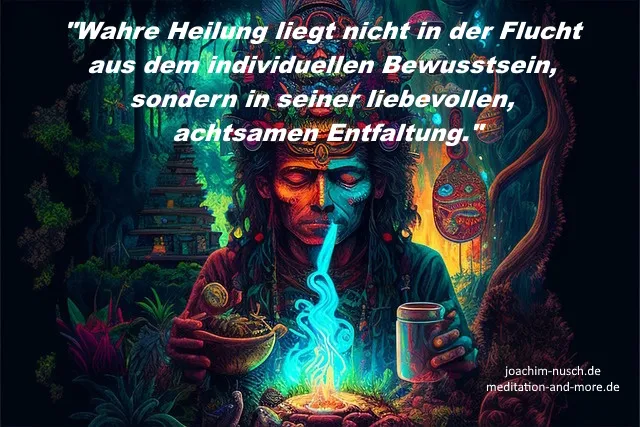
In today’s coaching landscape, methods such as so-called “breakthrough coaching,” which involve consciousness-altering substances like LSD or its derivatives, ayahuasca , psilocybin, kambo (also known as frog secretion or sapo), San Pedro (also known as huachuma ), peyote, and others , are gaining increasing popularity. This development attracts not only serious practitioners but also so-called “fake gurus” who promote questionable practices. What risks does this mixing of coaching and psychedelics entail?How can clients distinguish between authentic offers and dangerous promises?The integration of psychedelics into coaching and therapy sessions is based on the assumption that these substances can promote profound insights and healing. In group settings, a collective space of consciousness emerges in which individual experiences interact. This dynamic can lead to intense shared experiences, but also carries significant risks. Different individual reactions to the substances can be amplified within the group, potentially leading to collective euphoria or anxiety. The boundaries between personal and shared experiences become blurred, making it difficult to distinguish one’s own visions from those of others. This underscores the need for careful and professional guidance during such sessions.A central aspect in this context is interconnectivity—a concept that goes beyond mere connection and encompasses relationship, resonance, and responsibility. In group experiences with psychedelics, a shared field of resonance emerges in which individual states of consciousness can overlap, synchronize, or collide. Through mechanisms such as mirror neurons, facial expressions, gestures, breathing rate, and posture, an empathic resonance can arise in which the participants’ nervous systems synchronize. This can lead to collective emotions such as shared euphoria or fear. The challenge lies in distinguishing one’s own experiences from those of others within this collective space of consciousness, as awareness is not locally bound but operates in the interstitial space, in relationship and resonance.Traditionally, the responsibility for leading ceremonies involving consciousness-altering substances rests with experienced shamans who possess profound knowledge and extensive training within their respective cultures. These practitioners are able to navigate the complex dynamics of such experiences and create a safe space for participants. In contrast, modern coaches often lack the necessary experience and cultural context to adequately lead such sessions. The unreflective adoption of shamanic practices without appropriate background knowledge can be not only ineffective but also dangerous.The growing popularity of psychedelic experiences in the coaching field has also led to an increase in self-proclaimed gurus, often operating without sound training or ethical standards. These “fake gurus” exploit many people’s yearning for healing and self-discovery to offer dubious services. They promise quick fixes and transformative experiences without addressing the potential dangers or the complexity of individual psychological processes. This can not only lead to disappointing results but also cause serious psychological harm.The use of psychedelics in therapeutic contexts requires a high level of expertise and ethical responsibility. Experts emphasize that such substances should not be used lightly and that comprehensive knowledge of their effects, potential risks, and contraindications is essential. Furthermore, it is important that therapists and coaches have thorough training in guiding psychedelic experiences and are able to create a safe space for their clients.The fascination with psychedelic substances in the coaching field reflects a deeper need for alternative healing methods and personal growth. However, caution is advised: not everyone offering such services possesses the necessary qualifications or acts in the best interests of their clients. It is the responsibility of each individual to critically examine offers and ensure that they are conducted by competent and ethical professionals.In this context, the Dalai Lama emphasizes: “Knowledge and experience are the best teachers.” This wisdom underscores the importance of sound knowledge and practical experience when guiding people through altered states of consciousness. It is essential that those who lead such experiences possess the necessary competence and integrity to ensure the safety and well-being of the participants.
Conclusion:While the modern world increasingly embraces consciousness-altering substances for healing and self-realization, ancient spiritual traditions show us a different, gentler path: meditation, deep trance, bija cure, yagyas and other Vedic practices have been used for millennia to expand human consciousness naturally and sustainably – without chemical intervention, without side effects.These methods work through sound, breath, vibration, and subtle energy fields. They not only promote self-healing but also open the heart and mind to deeper insights without overwhelming the nervous system. They contain a wisdom that creates space for integration – gentle, soft, profound, and transformative.Especially in a time when collective resonance fields are gaining importance and interconnectedness is becoming a test of our sense of responsibility, these ancient paths offer a powerful, timeless alternative. They remind us that true healing does not lie in escaping consciousness, but in its loving, mindful unfolding.
joachim-nusch.de
meditation-and-more.de