
About us
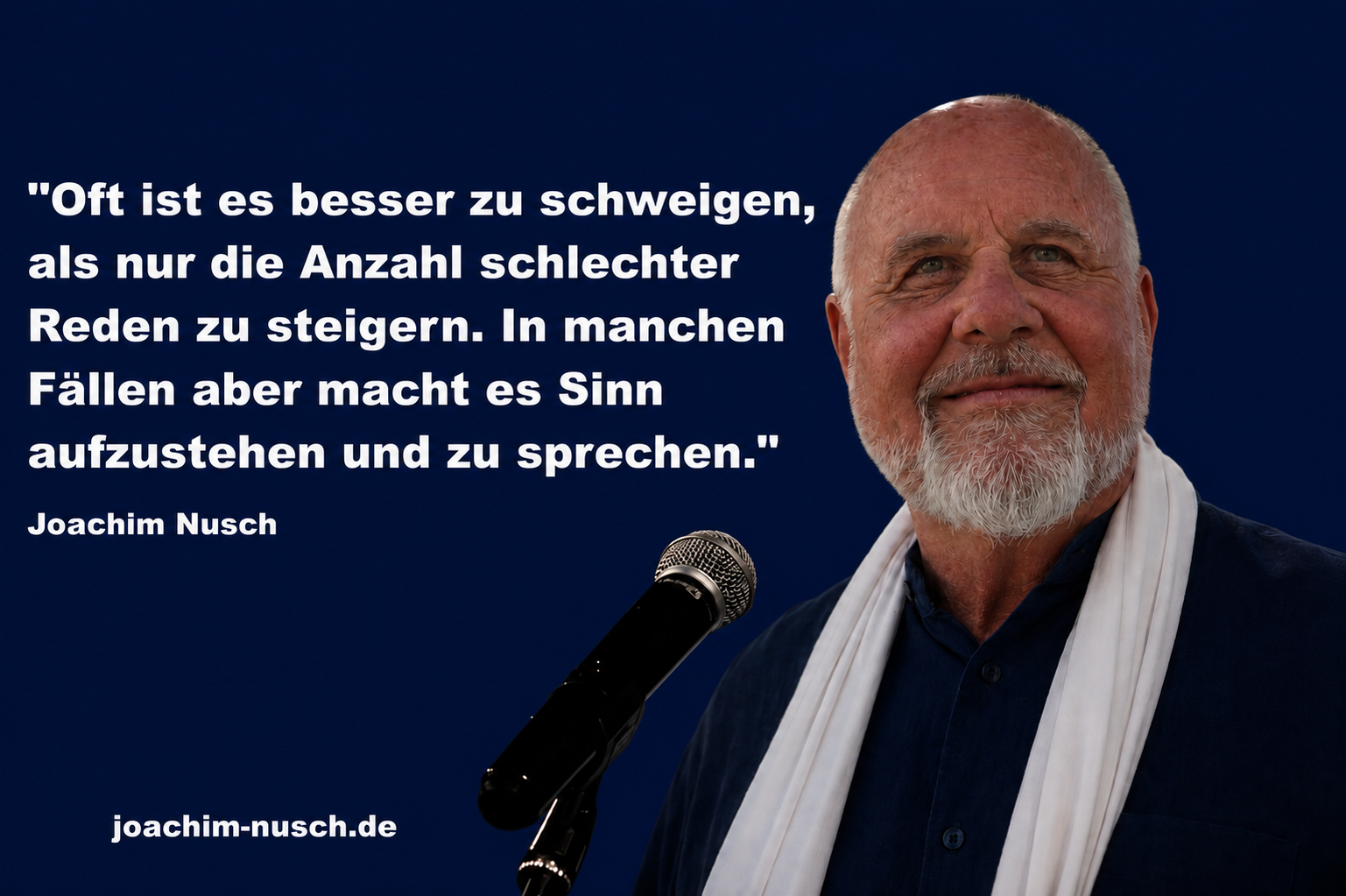
About Joachim Nusch
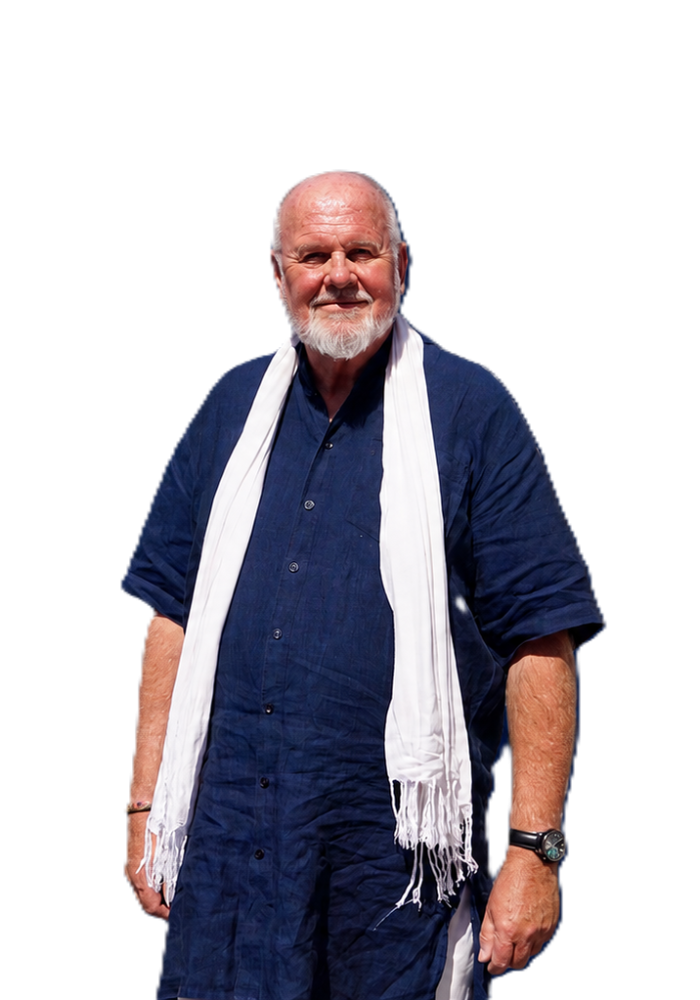
Joachim Nusch (born 1955) is a German author, meditation teacher, management trainer, motivational trainer and leadership consultant, as well as an expert in Vedic astrology, yoga and Ayurveda, the traditional medicine in India. He is particularly known for his work in the field of spirituality and meditation, including the development of the “Vital Self Meditation” method. In his writings and lectures, Nusch combines ancient Vedic wisdom with modern scientific findings, especially from the fields of neurobiology, psychology and quantum physics. After many years of studying the Vedic sciences, he now bears the title “Jyotish Shastri Samman”. Sri Jyoti.
Life and work
Joachim Nusch, born in the 1955s, has studied Vedanta, Yoga, Ayurveda, Sanatana Dharma, Vedic astrology (Jyotish), and meditation from a young age. Drawing on these traditions, he developed Vital Self Meditation, a meditation method inspired by Bhavatit Dhyan (Dhyana) that combines traditional yoga with modern psychology to reduce stress, calm the mind, and foster self-awareness.
Alongside his work as a meditation teacher, Nusch is a management and motivational trainer, helping leaders integrate meditation, mindfulness, and Vedic wisdom into their personal and professional development.
His approach aligns with the five dimensions of the Inner Development Goals (IDG): Being (mindfulness and authenticity), Thinking (critical and creative thinking), Relating (empathy and connection), Collaborating (teamwork), and Acting (sustainable, courageous decisions in harmony with nature). These dimensions emphasize that lasting sustainability begins with inner development.
Books and Publications
Joachim Nusch is the author of several books on meditation, Vedic astrology, Ayurveda, and leadership. His book “Meditation muss das sein? Vital Self Meditation – The Yoga Path of Meditation” explains a traditional meditation practice and its benefits for stress management and personal development.
In “Teatime and Curry: Stories for Enjoyment, Inspiration and Joie de vivre”, he combines Eastern wisdom with Western lifestyle through stories that promote mindfulness, enjoyment, and balance.
His works take an interdisciplinary approach, integrating spiritual traditions with modern perspectives and drawing inspiration from thinkers such as Albert Einstein, Carl Gustav Jung, Swami Vivekananda, Sri Aurobindo, Adi Shankaracharya, Paramahansa Yogananda, Maharishi Mahesh Yogi, and Ramana Maharshi.
Teaching and influence
Joachim Nusch is an international teacher, speaker, management consultant, and meditation trainer. He teaches Vedanta, Yoga, Ayurveda, Vedic Astrology, meditation, mindfulness, and leadership, helping individuals and organizations integrate inner development into everyday life and work.
He also serves as a mental coach for international show jumpers, supporting elite riders in building mental strength, confidence, and peak performance through a holistic approach that emphasizes the connection between rider and horse.
Spiritual Coach Vision Mission Guiding Principles
MISSION
The mission statement of a spiritual coach is based on the values and beliefs that he or she considers essential for a fulfilled life. A spiritual coach recognizes the importance of self-acceptance, compassion, and authentic self-expression. The coach’s mission statement is to build an open, trusting and supportive relationship with his clients and to help them achieve their personal goals. The coach encourages his clients to find their own path and use their unique talents and skills to achieve their personal goals.
Overall, it is important that a spiritual coach has a clear vision, mission, and mission statement in order to make their work effective and help their clients in the best possible way. Jyotish, Vedic astrology, can help him understand this goal more clearly and concretely. By understanding the individual needs and desires of their clients and integrating spiritual practices and techniques, a spiritual coach can be a valuable resource for people seeking personal fulfillment and quality of life.
VISION
The vision of a spiritual coach is to help people live a fulfilling life based on their individual values and beliefs. A spiritual coach sees their clients as complete beings and recognizes that each person has a unique journey based on personal experiences, challenges, and triumphs. The coach is aware that each client’s wants and needs are unique and that there is no universal solution to every problem. The coach’s vision is to build a trusting relationship with their clients to support them in exploring their individual needs and desires.
The mission of a spiritual coach is to support their clients in unleashing their full potential and achieving their innermost dreams and goals. The coach recognizes that each person has a unique combination of skills, talents, and traits that can be directed toward personal fulfillment. Through a combination of mindfulness, empathy and techniques for self-reflection and expansion of consciousness, the spiritual coach supports his clients in achieving their personal goals and improving their quality of life.
team
Joachim Nusch,
Managing Director
Katrin Cohnen
Horse coaching and yoga
Martina Nusch
Processes, Customer Advisor
Sebastian Herth
web design
Claudia Smolinski
Texts
Curriculum: My Path as a Jāti Guru
My teaching is founded on decades of personal experience as a spiritual teacher, Vedanta philosopher, Jyotishi, Ayurvedic practitioner, and consciousness researcher. It is rooted not only in study, but in lived experience and spiritual practice.
I see my work as that of a Jāti Guru—a teacher guided by an inner calling and a deep commitment to sharing timeless wisdom. Drawing on the traditions of Vedanta, Jyotish, Ayurveda, mysticism, and consciousness studies, I seek to build bridges between Eastern spirituality and Western thought, as well as between ancient wisdom and contemporary life.
My aim is to help individuals discover greater self-awareness, inner clarity, and authentic purpose by making these teachings accessible and relevant to the challenges of the modern world.
1. Birth and the Call of the Inner Teacher
I learned early that true teaching begins with listening, not speaking. I see my path as a natural inner calling, shaped by Dharma and a lifelong commitment to spiritual wisdom. My first teacher was silence; my second was life itself.
2. Jyotish – The Map of Dharma
Through Vedic astrology (Jyotish), I came to understand teaching as an essential part of my life purpose. Jyotish became not only a science of self-understanding but also a path of spiritual insight and personal transformation.
3. Vedanta – The Teaching of the Self
Inspired by the teachings of Adi Shankaracharya, Ramana Maharshi, and Swami Chinmayananda, I learned that the highest teacher is the Self. My teaching emphasizes direct experience, self-inquiry, discrimination (Viveka), and detachment (Vairagya).
4. Dharma and Responsibility
I believe a spiritual teacher serves through responsibility rather than authority. Guided by the Bhagavad Gītā’s principle, “Yogah karmasu kaushalam”—Yoga is skill in action, I strive to ensure that my work supports awakening, clarity, and authentic growth.
5. Vital Self Meditation
Vital Self Meditation, developed through my studies and practice, offers a practical path to inner silence, self-awareness, and lasting peace. It is designed to help people experience their deeper nature beyond thought and stress.
6. Ayurveda – The Art of Conscious Living
I teach Ayurveda as a holistic way of life rather than only a healing system. By cultivating balance through Sattva in thought, emotion, and action, it supports health, clarity, and harmony with nature.
7. Sampradaya 2.0 – Living Tradition
My vision is to preserve authentic spiritual wisdom while making it accessible through modern media, including books, retreats, podcasts, and online learning. Ancient knowledge can remain alive and relevant in today’s digital world.
8. Teaching as Service
For me, teaching is an act of service. I see myself as a channel rather than the source of wisdom, with the purpose of helping others discover their own inner teacher and awaken their highest potential.
Joachim Nusch on his contribution mission statement. Why does he enjoy his work?
References

The text lists the professional background of a trainer and consultant in e-commerce, e-learning, sales, and leadership. It includes roles in international companies and training networks, work in project management, development of education systems, consulting on digital learning (CBT/WBT), and leadership training. It also highlights experience as a managing director, speaker, and developer of HR and training tools across Germany, Switzerland, the UK, and the USA.
Memberships






Organization and execution of internal events, change management processes and seminars for companies and employees for:
- handle
- Thyssen-Schulte
- Jacobs-Suchard, Kraft Foods
- Scipio-Atlanta AG
- Textar
- Illbruck
- Opel Dell
- Stihl
- Greven’s & Bechthold
- German Postal Advertising
- Oracle
- Tepper elevators
- Edelhoff Entsorgung GmbH
- STOP OVER REISEN GmbH
- Proactiv Holding AG
- Sanacare GmbH
- AccorHotels
- Burmah Oil
- Bran + Luebbe GmbH
- MSK Verpackungen GmbH
- Compudent
- UBS AG
- Roland Frucht GmbH
- Deutsche Post AG – Euro Express
- Lufthansa
- Aachen Munich Insurance Group
- Gerling
- Shopmaker AG
- Inline AG/Metatrain GmbH
- SanaCare Health Products GmbH & Co.KG
- University of Barcelona and other
In addition, countless individual coaching sessions.